
How to Start a Private Physiotherapy Practice
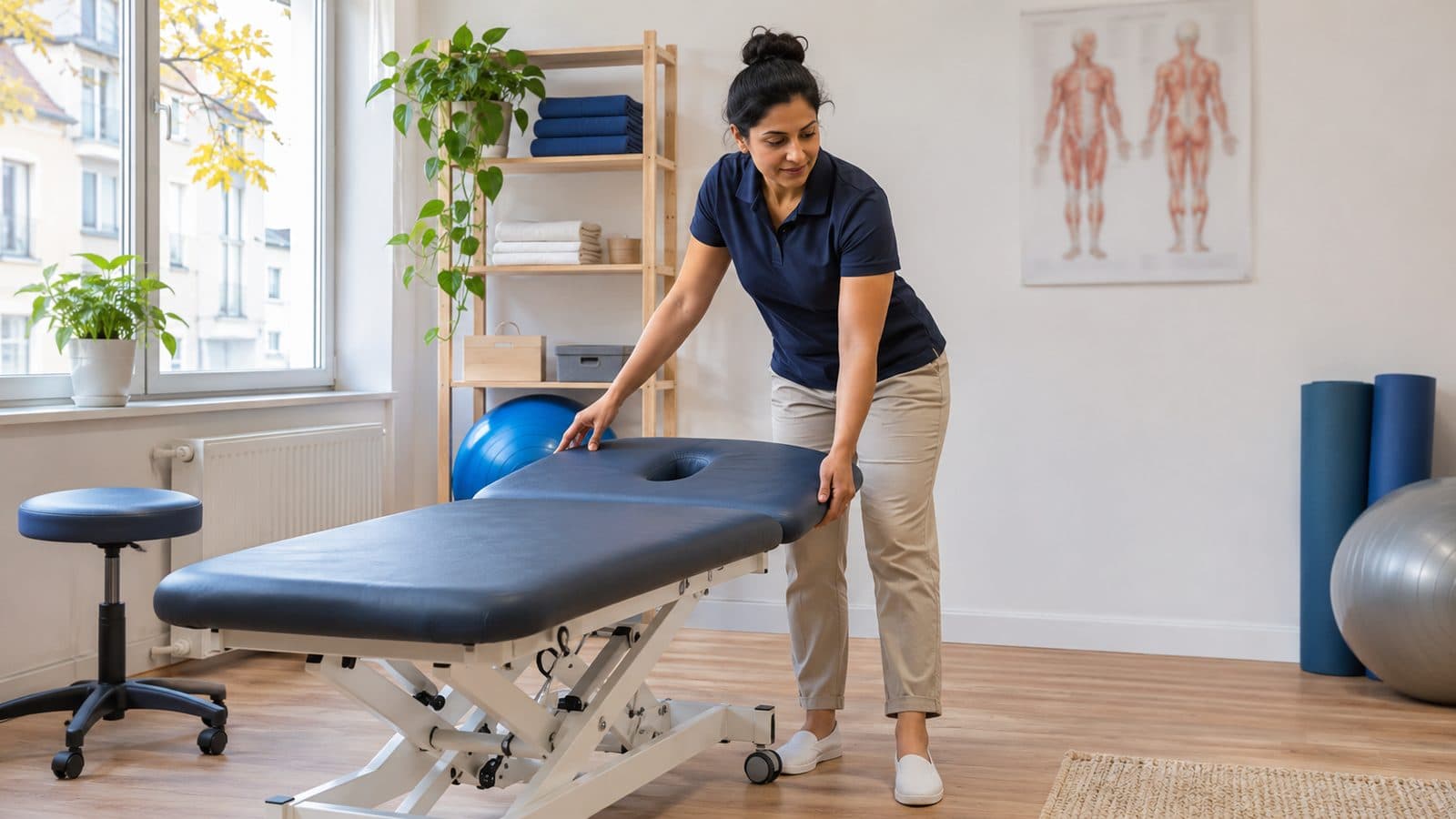
> General information, not legal advice — as of November 2026. Professional and registration rules for physiotherapists differ by country. Check with your regulator or professional association before you start.
Many physiotherapists reach a point where they want more control: over their caseload, their hours and how they treat. If you are thinking about how to start a private physiotherapy practice, this guide walks you through the main steps: registration and professional requirements, choosing a room or a clinic, self-pay pricing and session packages, notes and consent, getting referrals, and the admin you can automate from day one.
We build practice software, so we focus on the business side. For the clinical and legal side, we point you to the bodies that set the rules.
Registration and professional requirements
Before anything else, make sure you are allowed to practise independently where you plan to work. Rules vary a lot across Europe. Two examples:
- United Kingdom: "Physiotherapist" is a protected title. You must be registered with the Health and Care Professions Council (HCPC) and meet its standards, including keeping records of your work. Most private practitioners also join a professional body and hold professional indemnity insurance.
- Germany: physiotherapists need the state permission to use the professional title. Treating self-paying patients without a doctor's prescription generally needs an additional, sector-specific Heilpraktiker permission for physiotherapy. Your professional association and the local health office can tell you what applies to you.
Elsewhere, check with your national regulator. Also think about:
- Business registration and tax: self-employed or a company? Ask a tax adviser.
- Insurance: professional indemnity and public liability as a minimum.
- Data protection: health data needs extra care under GDPR. See our guide on health data and GDPR for therapists.
Choosing a room or a clinic
You do not have to sign a long lease on day one. Common starting points:
- Renting a room by the session or day in an existing clinic, gym or wellness centre. Low risk and a ready flow of people.
- Home visits for patients who cannot travel easily. Low overheads, but plan your travel time.
- Your own clinic. Full control, but rent, fit-out and equipment come first.
Example: a self-employed physiotherapist in Freiburg could rent a room in a gym two days a week and do home visits on the other days, then move to her own clinic once both are busy.
When you look at a space, check:
- accessibility for people with limited mobility;
- privacy: soundproofing, a place to change, a lockable door;
- space for a plinth and exercise work;
- parking and public transport;
- whether you can put up a sign.
Self-pay pricing and session packages
In a private practice, you set your own prices. A simple structure works best:
- Initial assessment: longer and priced higher, for example 60 minutes.
- Follow-up sessions: 30 or 45 minutes.
- Session packages: for example 6 follow-up sessions paid up front at a small discount.
Look at local prices, your experience and your costs, then decide where you want to sit. Do not race to the bottom; patients choosing private physiotherapy often value availability and time more than the lowest price.
Packages help patients commit to a full course of treatment instead of stopping after two sessions. Be clear about:
- how long the package is valid;
- what happens if the patient stops early;
- your cancellation rules.
Taking a deposit or payment at booking reduces missed sessions. Our article on how booking deposits reduce no-shows explains how to set one up.
Notes, consent and record keeping
Good documentation protects your patients and you. Your regulator expects full, clear and accurate records of every patient you treat.
Plan for:
- An intake questionnaire before the first session: medical history, medication, red flags, goals.
- Consent: explain the treatment and record the patient's agreement.
- Clinical notes after every session. Many physiotherapists use the SOAP format; see our guide on how to write SOAP notes.
- Treatment plans with goals, interventions and review dates.
- Retention: keep documentation for the period your national rules require. In Germany, for example, § 630f of the Civil Code (BGB) sets ten years after the end of treatment unless other rules apply.
In BizBrew, intake forms with an e-signature are filled in when a patient books online. Clinical notes (SOAP, DAP, BIRP, progress or general) can be linked to a booking and are locked once signed. Treatment plans record diagnosis, goals, interventions, status and a review date. Only team members whose role allows clinical notes can see them.
Getting referrals
New practices grow mostly through people, not ads. Build relationships with:
- GPs and doctors in your area. A short introduction letter and a clear explanation of what you treat helps.
- Gyms, running clubs and sports teams. Offer a talk on injury prevention.
- Other practitioners: massage therapists, osteopaths, personal trainers.
- Past patients. Ask happy patients to leave a review and recommend you.
Make it easy to book. A referral who has to phone during your clinic hours may never reach you. An online booking link that works on a phone captures them while they are still motivated.
Admin you can automate
Admin eats into treatment time. Automate the repetitive parts from the start:
- Online booking for assessments and follow-ups, with your own availability rules.
- Automatic reminders by email.
- Intake forms completed before the first visit.
- Payments and invoices through your own Stripe account, with itemised invoices for self-paying patients.
- Packages with usage tracking, so you know how many sessions each patient has left.
- Recurring appointments for patients on a regular plan.
See our guide to choosing physiotherapy practice software for a full checklist.
Equipment and set-up costs
You can start a private practice with surprisingly little equipment, then add to it as your caseload shows what you actually use. A typical starting list:
- a good treatment couch, ideally height-adjustable;
- exercise equipment: resistance bands, weights, a step, balance aids;
- hygiene supplies: couch roll, disinfectant, hand sanitiser, towels;
- a laptop or tablet for notes and bookings;
- a card reader if you take payments in person.
Resist the urge to buy expensive machines before you know you need them. Many physiotherapists find that most of their work is hands-on treatment and exercise, which needs space and time more than gadgets.
Build a simple monthly budget too: rent, insurance, professional fees, software, card fees, marketing and your own pay. Work out how many paid sessions a week cover those costs. That number is your first target.
How to start a private physiotherapy practice: your first 90 days
The first three months set the tone. A simple plan:
Month 1: get the basics right
- Set up online booking, reminders and payments before your first patient.
- Publish a clear price list and cancellation policy on your website.
- Introduce yourself to five local referrers: doctors, gyms, sports clubs.
Month 2: build habits
- Write notes the same day, every day.
- Ask every new patient how they found you, and record it.
- Follow up with patients who did not rebook after their first session.
Month 3: review and adjust
- Look at which referral sources bring the most patients.
- Check how many patients complete their recommended course of treatment.
- Adjust your opening hours to match when people actually book.
Do not forget your own wellbeing. Private practice means you are also the receptionist, the bookkeeper and the marketing department. Block time for admin, keep up your professional development, and agree with a colleague who could help your patients if you were suddenly unable to work.
Keep a short weekly review: bookings, cancellations, new patients and income. Fifteen minutes on a Friday tells you more than a long report once a year.
FAQ
Can I start a private practice straight after qualifying?
It depends on your country's rules and your experience. Many physiotherapists work in an employed role first to build clinical confidence and a network.
Do I need my own clinic to start?
No. Renting a room by the day, working in a gym or doing home visits are common, lower-risk ways to start.
How should I price my sessions?
Charge more for the initial assessment than for follow-ups, compare local prices, and use session packages to encourage patients to complete their treatment.
Should I offer online sessions?
Some follow-up work, such as exercise reviews and advice, can work well remotely. Check your regulator's guidance and your insurance cover before offering it.
What records do I need to keep?
Intake information, consent, clinical notes and treatment plans, kept for the period your national rules set. Ask your regulator or professional association.
How BizBrew helps
BizBrew gives a physiotherapy practice online booking, reminders, intake forms with e-signature, signed clinical notes, treatment plans, packages and payments in one place, hosted in the EU with role-based access. Healthcare plans start at €25 a month, and the Starter plan comes with two free months.
When you are ready, start your 2 free months.