
Barbershop Walk-Ins vs Appointments: How to Run Both
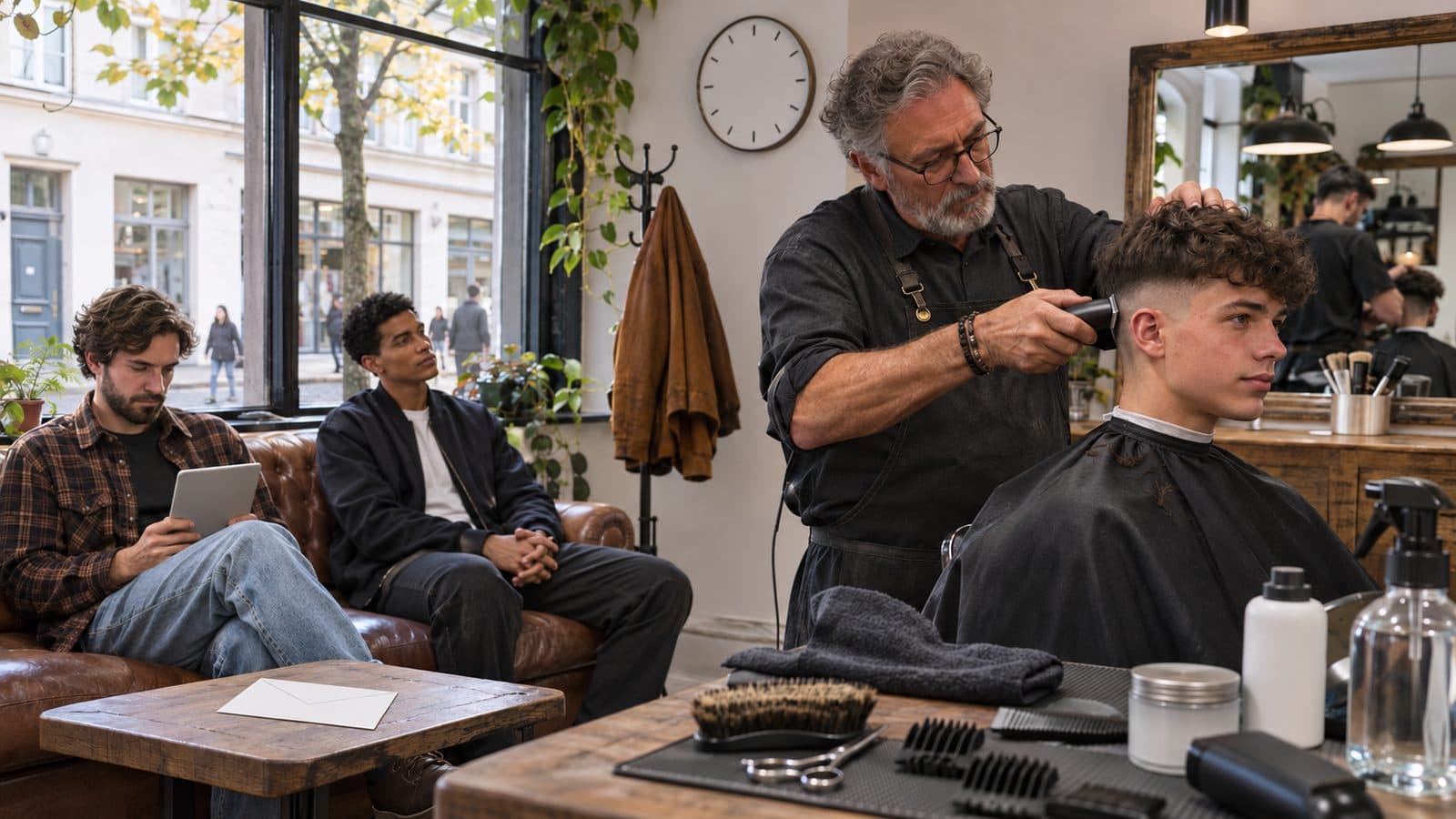
Walk-ins are part of barbershop culture. So are regulars who want "their" barber at "their" time every three weeks. Most shops end up running barbershop walk-ins and appointments side by side, and that can be either the best of both worlds or a daily headache. This guide explains how to run a hybrid that works: how to reserve chairs or hours for walk-ins, check people in when they arrive, keep waiting clients happy, price add-ons and stop no-shows without scaring off walk-ins.
Barbershop walk-ins and appointments: why most barbers run a hybrid
Pure walk-in shops have a strong appeal: no booking, no admin, just come in. But they also have problems:
- Regulars wait behind first-timers and sometimes leave.
- Quiet and busy times are unpredictable, so staffing is guesswork.
- Longer services, such as a skin fade with a hot-towel shave, are hard to fit in.
Pure appointment shops solve those problems but lose others:
- Passers-by go elsewhere when the shop says "fully booked".
- No-shows leave empty chairs that a walk-in could have filled.
- Some customers simply don't want to book for a quick trim.
So most barbers mix both. The question is how to make the mix predictable.
Reserving chairs or hours for walk-ins
There are three common ways to structure a hybrid.
1. Dedicated walk-in chairs
One or more chairs take only walk-ins; the others take only appointments. It's simple for customers to understand: "Chair 3 is for walk-ins."
- Works well for: shops with three or more chairs.
- Watch out for: a walk-in barber with a long queue while the appointment barbers are idle, or the other way round. Be ready to move people between chairs.
2. Walk-in hours
Certain times are for walk-ins, the rest for appointments. For example, "Walk-ins welcome Tuesday to Thursday 10:00–14:00", and appointments only in the evenings and on Saturdays.
- Works well for: smaller shops with one or two chairs.
- Watch out for: customers who don't know the rules. Put the hours on the door, your website and your Google profile.
3. Gaps in the appointment diary
Every barber keeps short gaps between appointments for walk-ins. For example, after every two appointments, a 30-minute slot stays open.
- Works well for: shops where walk-in demand is steady but not huge.
- Watch out for: barbers who fill the gaps with bookings anyway. Agree the rule as a team.
Example (an illustration): a three-chair barbershop in Dublin could keep chair 3 for walk-ins all week, and let the other two barbers take bookings with one walk-in gap every two hours.
Checking clients in when they arrive
When walk-ins and booked clients arrive at the same time, clear check-in avoids arguments.
- Booked clients: greet them, check their name against the diary, and confirm their barber.
- Walk-ins: take their name and what they want, and give an honest wait estimate.
- One person at a time should handle the front of house, even if that person is also cutting hair. Customers want to know someone is in charge.
Record walk-ins in the same system as appointments. That way you see your whole day in one place, and you learn how many walk-ins you actually serve on each day of the week.
Some shops use a whiteboard or a paper list for the walk-in queue. That's fine, as long as someone keeps it up to date and the final cut is recorded with the payment.
Keeping waiting clients informed
Waiting is more pleasant when you know how long it will take.
- Give a realistic wait time, and slightly overestimate rather than underestimate.
- Offer to text or call when they're next, so they can grab a coffee nearby.
- Explain the order: "You're second after these two gentlemen."
- Separate booked clients clearly: "This gentleman has a 3pm booking, so he'll go in now; you're next on the walk-in list."
- Make the wait comfortable: seating, water, Wi-Fi.
Barber booking etiquette also applies the other way: ask booked clients to arrive on time, because a late booked client delays the walk-ins too.
Pricing, add-ons and beard services
Hybrid shops often keep a simple price list for walk-ins and a few longer services that are bookable only.
- Walk-in friendly: standard cut, skin fade, beard trim, kids' cut.
- Book-ahead services: hot-towel shave, cut and beard sculpt, grey blending, longer restyles.
Add-ons increase the average ticket without needing a new client:
- beard oil treatment
- hot towel
- eyebrow tidy
- hair wash and styling
Offer add-ons at booking and again in the chair, without pressure. Some shops price a few "combos" (cut plus beard) slightly lower than the separate services.
Stopping no-shows without losing walk-ins
No-shows are especially frustrating in a busy shop: someone booked a slot that a walk-in would gladly have taken.
- Send reminders before each appointment, with a link to cancel. Our guide to reducing no-shows with automated reminders has the details.
- Use a cancellation cut-off, for example two or four hours, and show it at booking.
- Take a deposit for longer or premium services. See how booking deposits reduce no-shows.
- Give no-show slots to walk-ins straight away. Wait a few minutes after the booked time, then serve the next walk-in.
- Keep records: a client who misses several appointments can be asked to pay a deposit next time. Keep only the client data you need, in line with the EU General Data Protection Regulation or UK equivalent.
The great advantage of a hybrid shop: a no-show is less painful when there's a walk-in waiting.
Staffing and reviewing your hybrid
A hybrid only works if your staffing follows your real demand. After a month, look at your records:
- Walk-ins per day and hour. Many shops discover that walk-ins peak on Saturday mornings and weekday lunchtimes, and barely exist on Tuesday evenings.
- Booked appointments per barber. Are some barbers fully booked weeks ahead while others mainly take walk-ins?
- Average wait for walk-ins. If people regularly wait more than 30 to 40 minutes, some will leave without a cut.
- Turned-away walk-ins. Ask staff to note when someone leaves because the wait is too long. That's lost revenue you can measure.
Then adjust. Move a walk-in chair to the busiest days, open more bookable slots where walk-ins are rare, or add a part-time barber for Saturday mornings.
Review the setup every season. Demand in December, before holidays and in summer often looks different from the rest of the year. A rule that worked in spring may need tweaking by autumn.
FAQ
Should my barbershop take walk-ins or appointments?
Most shops do both. Choose a structure (walk-in chairs, walk-in hours or diary gaps) that fits your size and customers, and communicate it clearly.
How do I manage a walk-in queue?
Keep one list, give honest wait times and record each walk-in in your system with the payment, so you can see patterns over time.
Do booked clients always go first?
Generally yes, at their booked time. Explain this to walk-ins up front so nobody feels skipped.
How BizBrew helps
BizBrew keeps appointments and walk-ins in one diary. Clients book online with the barber they prefer; staff add walk-ins as bookings, or use the walk-in checkout to record the service and payment in one go (scheduling and bookings). Booking add-ons, buffer times, per-service deposits and a cancellation cut-off are built in, and email reminders cut no-shows. Staff schedules and roles sit under operations.
It works for barber shops, hair salons and other salon and spa businesses. Plans start from €15/month; start your 2 free months.