
How to Open a Pilates Studio: Mat, Reformer or Both?
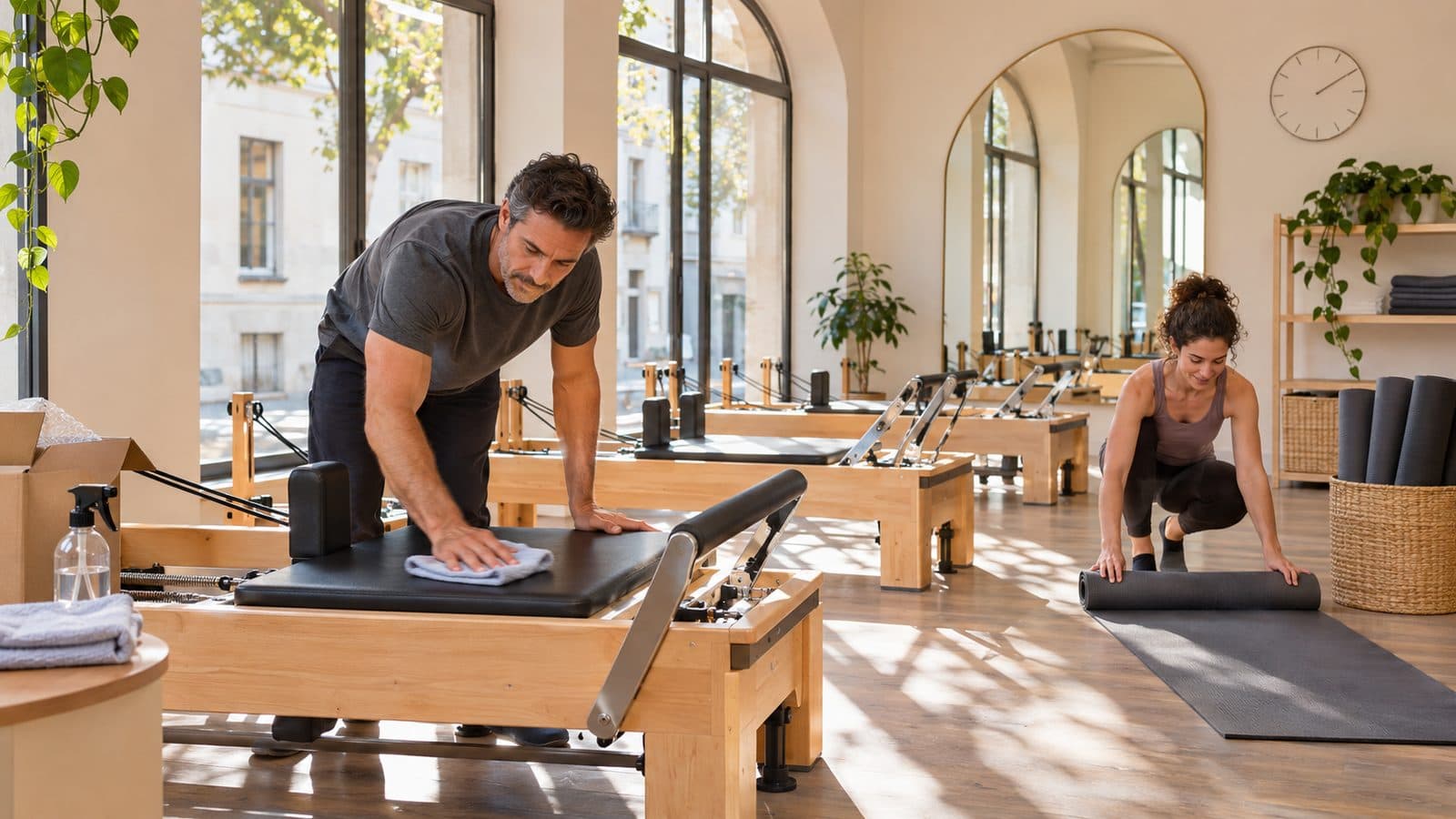
Pilates has moved from a niche class in the corner of a gym to a business in its own right. If you are a teacher thinking about how to open a Pilates studio, the first big decision shapes everything else: mat, reformer or both? This guide covers the economics of each, space and layout, class sizes and timetable, intro offers and private sessions, matching bookings to your equipment, and keeping students after their first month.
We build booking software for studios rather than teach Pilates ourselves, so treat this as a practical planning guide. Where prices depend on your city and suppliers, we explain how to work them out instead of guessing.
Mat vs reformer economics
The choice between mat and reformer is mainly a choice between low cost and high value per class.
Mat studio
- Low start-up costs: mats, small props, a sound system and a good floor.
- Larger classes are possible, because each student only needs floor space.
- Lower price per class, because students compare you with gym classes.
- Easy to start in a rented room.
Reformer studio
- High start-up costs: each reformer is a significant purchase, plus delivery, installation and servicing.
- Class size is limited by the number of machines. Eight reformers means eight students, never nine.
- Higher price per class, because students value the equipment and the small group.
- You need a dedicated space, as reformers are heavy and hard to move.
Both
Many studios start with mat classes in a rented room, build a base of students and then add a small reformer room. Others open with a few reformers for private and duet sessions, and run mat classes in the same space at other times.
A simple way to compare options is to calculate revenue per hour. Example: a mat class of 14 at €15 and a reformer class of 6 at €32 bring in similar amounts per hour, but the reformer studio needed far more money up front. Get real quotes from equipment suppliers and work out how many full classes a month you need to cover the cost.
Space, equipment and layout
Before signing a lease, visit at the times you plan to teach. Check noise, light, temperature and parking.
For a reformer studio, also check:
- Floor strength and access. Reformers are heavy. Can they be carried in?
- Spacing. Teachers need to walk between machines and see every student.
- Ceiling height if you plan to add towers or other tall equipment.
- Storage for props, so the room stays calm.
- Changing space and a toilet.
Keep a simple equipment log: purchase date, servicing dates, any repairs. It helps with safety and with planning replacements. In the UK, the HSE's guidance on work equipment explains the general duty to keep equipment safe and maintained.
Class sizes and timetable
Class size is part of your brand. Smaller classes mean more attention and a higher price.
- Reformer group classes: limited by the number of machines.
- Mat classes: decide a maximum that still lets you correct form, not the number the room could physically hold.
Build your first timetable around fixed anchor slots: early morning, lunchtime and early evening on weekdays, plus weekend mornings. Add levels clearly: "Foundations", "All levels", "Intermediate". A student who walks into the wrong level and struggles may not come back.
Full classes are a good problem, but they need managing. When a class is full, a waitlist captures the demand and shows you where to add a session. Our guide to running a class waitlist explains how to make that fair.
Intro offers and private sessions
Most students need help getting started, especially on a reformer.
Intro offers
- A short course of introductory reformer sessions in a small group.
- A first-week or first-month offer for mat classes.
- Make intro offers for new students only, and time-limited.
Private and duet sessions
- One-to-one or two-person sessions earn more per hour and suit people with injuries or specific goals.
- They are a natural first step before group reformer classes.
- They fill quieter daytime hours.
Price privates as a premium service and sell them in small packages, for example five sessions. Our guide to class packs covers pack sizes and expiry dates.
Matching bookings to your equipment
In a reformer studio, the machine is the real limit. Your booking system should reflect that.
For group classes, the simplest approach is to set the class capacity to the number of working reformers. If a machine is out of service, lower the capacity for those sessions so nobody is booked onto a broken reformer.
For private sessions or studios with different equipment, plan it the same way. In BizBrew, set each class's capacity to the number of working reformers, and for private sessions use one service per machine type with a capacity of one, so the timetable never offers more places than you have machines. Check how you want to set this up before you open, so your timetable and equipment always match.
Retention after the first month
The first month is exciting. The second and third months decide whether a student stays.
What helps:
- A clear path: from intro sessions to "Foundations" to "All levels". Tell students what comes next.
- Fixed slots: encourage students to book the same class each week. Habits keep people coming.
- Personal contact: teachers who know names and goals. Keep notes on each client profile: injuries, preferences, progress.
- A follow-up for quiet students: a short message after two or three weeks without a booking.
- Memberships or packs that reward regular attendance.
Watch your numbers: how many intro students book a second class, and how many are still booking after three months. These two numbers tell you more than total sign-ups.
Teachers and staffing
Your first teacher is probably you. As the timetable grows, you will need help, and the right teachers shape the studio as much as the equipment does.
Things to decide early:
- Qualifications: which training you expect for mat and for reformer teaching. Reformer teaching usually needs specific training on the equipment.
- Pay model: a fixed fee per class, an hourly rate, or a fee plus a bonus when a class is full. Keep it simple and fair.
- Consistency: agree on class formats, levels and cues, so a student gets a similar experience whoever teaches.
- Cover: a plan for illness and holidays. A cancelled class with no cover frustrates students who booked.
Give each teacher a clear view of their own schedule and the students booked into their classes. When a teacher changes, tell booked students in advance; in BizBrew, changing the instructor or time of a session also updates the bookings of clients already on it.
How to open a Pilates studio: a simple launch plan
Opening day is easier if you prepare the months before it:
- Three months before: confirm the space, order equipment, set prices and policies.
- Two months before: set up your timetable and booking page, write your intro offer, start collecting interested people's email addresses with their consent.
- One month before: open bookings for the first weeks, invite local businesses and health professionals to a free taster session.
- Opening week: run intro sessions, take photos (with permission), ask every new student how they found you.
Keep the first timetable smaller than you think. It is better to add classes because they are full than to cancel classes because they are empty.
FAQ
How much does it cost to open a Pilates studio?
It depends mainly on whether you buy reformers, and on rent and fit-out in your area. Get quotes for equipment and space, then work out how many full classes a month you need to cover the costs.
How many reformers should I start with?
Enough to run a viable group class at a price your area accepts. Many studios start with a small number for privates and small groups, and add more when demand is clear.
Can I run mat and reformer classes in the same room?
Yes, if there is space. Plan the timetable so that set-up and pack-down do not eat into class time.
Should I sell memberships or packs?
Both. Packs suit new and occasional students; memberships suit regulars who come twice a week or more. Price them so a regular student is better off on a membership.
How do I stop double-booking the same machine?
Set class capacity to the number of machines, and for privates check whether your booking system can link services to specific equipment.
How BizBrew helps
BizBrew gives Pilates studios a class timetable with capacities, online booking, waitlists, packs and memberships, and client profiles, all in one place, with each class capped at the number of working reformers. Studio and gym plans start at €39 a month, and the Starter plan comes with two free months.
To plan your timetable around your equipment, start your 2 free months.