
How to Manage a Day Spa: Rooms, Therapists and Packages
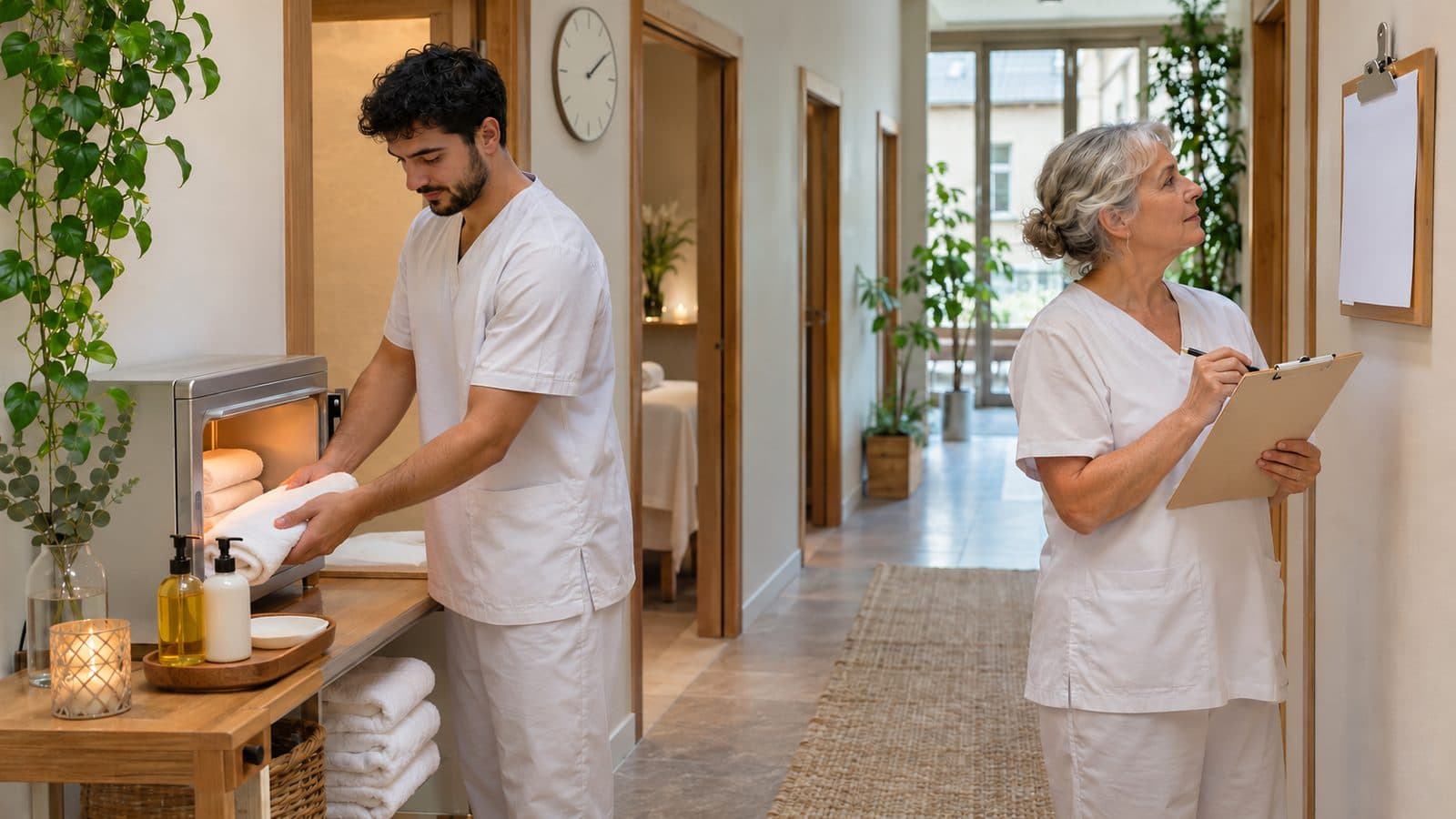
A day spa looks calm from the client's side: soft music, warm towels, no rush. Behind the scenes it's one of the most complex small businesses to schedule. If you're learning how to manage a spa, the challenge is that every booking needs the right therapist, the right room and sometimes the right equipment, all at the same time, with time to clean in between. This guide covers spa management tips for scheduling, packages, turnover, vouchers, retail and the daily numbers worth watching.
How to manage a spa: why scheduling is harder than in a salon
In a hair salon, most appointments need one thing: a stylist and a chair. A spa booking often needs three:
- A therapist qualified for that treatment.
- A room of the right type: a single room, a wet room, a double room.
- Equipment that may be limited: a hydrotherapy bath, a heated bed, a specific machine.
On top of that:
- Treatments vary in length, from 30-minute facials to three-hour rituals.
- Rooms need turnover time: fresh linen, cleaning, resetting temperature.
- Clients often book several treatments in a row, sometimes with a relaxation break in between.
- Some clients want to come together with a partner or friend.
That's why many spa managers find that a paper diary or a simple calendar stops working as soon as they have more than two rooms.
Rooms, therapists and equipment as resources
The most useful mindset shift is to treat rooms and equipment as resources that are booked, just like people.
For each treatment, write down:
- Duration, including any preparation inside the room.
- Which therapists can perform it.
- Which room types it needs.
- Which equipment, if any.
Then make sure your booking system checks all three before it offers a time. If a therapist is free but the only wet room is taken, that slot shouldn't appear.
Practical tips for day spa operations:
- Name your rooms clearly: "Room 1 (single)", "Room 3 (double)", "Wet room". Staff and systems both work better with clear labels.
- Don't lock a therapist to one room unless you have to. Flexibility lets you fit more bookings in.
- Protect scarce resources. If you have one hydrotherapy bath, don't let short treatments fragment its day.
- Set therapists' working hours and breaks in the system, so they aren't booked through lunch.
Building packages and day passes
Packages are where spas make their best margins, and where clients feel they get the most value.
Spa packages ideas
- Half-day package: a massage, a facial and access to the relaxation area.
- Full-day ritual: three treatments with lunch or a light snack.
- Seasonal package: a winter warming treatment, a summer refresh.
- Course of treatments: five massages or six facials, bought up front at a better price.
Day passes
If you have a sauna, pool or relaxation area, a day pass without treatments is a simple product. Limit the number of passes per day so the space doesn't feel crowded.
Pricing packages
- Price packages so they are slightly better value than the separate treatments, but don't give away your margin.
- Set a validity period on courses of treatments, for example six or twelve months.
- Be clear about what's included and what isn't, such as robes, towels or lunch.
Buffer times for cleaning and turnover
Turnover is often the hidden reason a spa runs late. If a 60-minute massage is booked back-to-back in the same room, the next client waits while the room is reset.
- Build buffers into the schedule, for example 10 to 15 minutes after each treatment.
- Use different buffers for different treatments. A wet treatment may need more cleaning time than a dry massage.
- Make buffers automatic, so nobody has to remember them when booking.
- Leave longer gaps for deep cleaning at set times of the day.
Buffers may look like lost revenue. In practice they prevent the knock-on delays that cost you far more in unhappy clients.
Staffing and therapist wellbeing
Therapists are your most valuable resource, and spa work is physically demanding. A schedule that looks efficient on paper can burn people out.
- Limit back-to-back deep-tissue or hot-stone treatments for one therapist. Mix in lighter treatments.
- Protect breaks. Put them in the schedule so they can't be booked over. The EU Working Time Directive sets minimum rest rules, and national laws add details.
- Match skills to treatments. Not every therapist does every treatment equally well, and clients notice.
- Plan holidays early, especially around Christmas, Valentine's Day and Mother's Day, when demand peaks.
- Share the schedule in advance, so therapists can plan their lives.
Happy, rested therapists give better treatments, and better treatments bring clients back. That's the most reliable growth strategy a day spa has.
Gift vouchers and couples bookings
Gift vouchers are a big part of spa revenue, especially around Christmas, Valentine's Day and Mother's Day.
- Offer amount vouchers (€50, €100, €150) and named packages ("Relax for two", "Half-day escape").
- Record every voucher with a code and balance, so redemption is easy.
- Plan capacity for redemption months, usually January and the weeks after big holidays.
Our guide on gift cards for service businesses has more detail.
Couples bookings
Couples treatments need two therapists at the same time in a double room. That makes them some of the hardest bookings to schedule.
If your system books one client at a time, enter a couples treatment as two bookings that start together, one per therapist, and note the double room on both. A one-page front-desk procedure keeps this consistent, whoever is on reception.
Retail and add-ons
Retail products, such as oils, creams and candles, can add meaningful revenue, and clients often want to take a bit of the experience home.
- Recommend, don't push. Therapists can suggest a product they used during the treatment.
- Display products in the relaxation area and at reception.
- Track stock, especially for products you only reorder occasionally.
Add-ons are small extras added to a booked treatment: a scalp massage, a hot-stone upgrade, a longer duration. Offer them at the time of booking and again at check-in. Our post on booking add-ons and upsells has ideas.
Daily KPIs for a spa manager
You don't need a complex dashboard. Check a few numbers every day or week:
- Room utilisation: what share of available room hours were booked?
- Therapist utilisation: what share of therapist hours were with clients?
- Average spend per client, including add-ons and retail.
- Rebooking rate: how many clients booked their next visit before leaving?
- No-shows and late cancellations.
- Voucher liability: how much value is sold but not yet redeemed?
A simple daily routine
Numbers help only if someone looks at them. A short routine keeps a spa running smoothly:
- Before opening: check today's bookings against rooms and therapists. Are there gaps you can fill from the waitlist? Any treatments that need special preparation?
- Midday: check how the morning ran. Are you on time? Is any room or therapist overloaded?
- End of day: note no-shows and late cancellations, check tomorrow's schedule, and make sure rooms are reset.
- Weekly: review the KPIs above with your team, and agree one thing to improve.
Compare week by week. If room utilisation is high but therapist utilisation is low, you have a room bottleneck. If it's the other way round, you may have too many staff on certain days.
FAQ
How do I stop my spa from running late?
Build automatic buffer times for cleaning and turnover into every treatment, and set realistic durations.
Should rooms be booked like staff?
Yes. Treat rooms and equipment as bookable resources so the system only offers times when everything a treatment needs is free.
What packages sell best in a day spa?
Half-day packages, courses of treatments and seasonal offers are popular. Keep the number of packages small and the contents clear.
How do I handle couples bookings?
Make sure two therapists and a double room are free at the same time, and follow a fixed procedure at the front desk.
How BizBrew helps
In BizBrew, services can require a staff member, with automatic buffer time before and after each booking, deposits per service and email reminders (scheduling and bookings). Rooms and equipment are not bookable resources on the salon and spa plan, so keep room planning in your rota for now. You can sell prepaid session packages with expiry dates, offer add-ons, and, from the Growth plan, issue gift cards and sell retail products.
It works for day spas and spa centres, massage therapy centres and other salon and spa businesses. Salon and spa plans start from €15/month; start your 2 free months.